Showing posts with label Law And Diplomacy. Show all posts

Saturday, March 25, 2017

(Hopefully) Before The Camel Settles Into The Tent

Image result for the camel's nose in the tent story
(Source: mywonderstudio.com)

INTRODUCTION

Word in the local media is that the Pakistani Senate will vote favourably on the mainstreaming of military courts next Tuesday. While some are wondering what was the hold-up that delayed the Senate from expressing its admiration for the legislation this past week, members of the analyst community were more curious about the exact details of the "bitter pill" arrangement negotiated by Senator Aitzaz Ahsan. While the news over the last few days has conveyed the general idea - he was tasked with achieving 9 conditions & achieved an awesome 4 - nobody seems to know much about the ramifications of passing a legislation that essentially suspends some very important civil rights for a minimum of 2 years (starting from Heaven knows which date, exactly).

After all, what makes a person a first-class citizen of any given sovereign nation is, in effect, the rights he or she is entitled to within the borders of his or her home country. When it comes to these rights, the interest of each nation is focused on whatever happens to be the most pressing issue at the current time. In most cases, the concerns of the common man center around the question of the link between quality of life versus the percentage of his income that is deducted as taxes. Take the United States: According to the latest news reports, the common man there is currently wringing his hands with worry about how the current Administration will relieve him of the huge expense of a health insurance system that costs him a fortune for services he doesn't need & then tells him that the expense has made investment in his specific needs financially unviable; all because some folks were more concerned about personal likes & dislikes than the interests of the people. Tragic.

In the same way, in light of the recent tax agreement signed with Switzerland, many analysts are wondering about the effect of a suspension of fundamental rights on the taxation system. In short, if the Senate votes to ratify a legislation that reduces the status as human beings of the citizens of Pakistan, which indirectly implies that the duties of the State to the people will shrink in proportion, does that go on to mean that the reduced responsibility translates into lower Government expenses & so, reduced taxes?

While it is hoped that the Pakistani Administration should provide an answer to this question sometime before March 28, 2017, it doesn't mean that it will. In the meantime, the most constructive pastime for interested parties might be to do a quick revision of what experts at the United Nations & in the legal profession have to say when explaining the all-important concepts that will be the first to be scrutinised in this discussion.

HUMAN RIGHTS

OHCHR
(http://www.ohchr.org/EN/Issues/Pages/WhatareHumanRights.aspx)

Human rights are rights inherent to all human beings, whatever our nationality, place of residence, sex, national or ethnic origin, colour, religion, language, or any other status. We are all equally entitled to our human rights without discrimination. These rights are all interrelated, interdependent and indivisible.

Universal human rights are often expressed and guaranteed by law, in the forms of treaties, customary international law , general principles and other sources of international law. International human rights law lays down obligations of Governments to act in certain ways or to refrain from certain acts, in order to promote and protect human rights and fundamental freedoms of individuals or groups.

THE FREE DICTIONARY
(http://legal-dictionary.thefreedictionary.com/human+rights)

Basic rights that fundamentally and inherently belong to each individual.

Human rights are freedoms established by custom or international agreement that impose standards of conduct on all nations. Human rights are distinct from civil liberties, which are freedoms established by the law of a particular state and applied by that state in its own jurisdiction.

Specific human rights include the right to personal liberty and Due Process of Law; to freedom of thought, expression, religion, organization, and movement; to freedom from discrimination on the basis of race, religion, age, language, and sex; to basic education; to employment; and to property. Human rights laws have been defined by international conventions, by treaties, and by organizations, particularly the United Nations. These laws prohibit practices such as torture, Slavery, summary execution without trial, and Arbitrary detention or exile.

TAXATION

THE FREE DICTIONARY
(http://legal-dictionary.thefreedictionary.com/taxation)

The process whereby charges are imposed on individuals or property by the legislative branch of the federal government and by many state governments to raise funds for public purposes.

The theory that underlies taxation is that charges are imposed to support the government in exchange for the general advantages and protection afforded by the government to the taxpayer and his or her property. The existence of government is a necessity that cannot continue without financial means to pay its expenses; therefore, the government has the right to compel all citizens and property within its limits to share its costs. The state and federal governments both have the power to impose taxes upon their citizens.

THE LAW DICTIONARY
(http://thelawdictionary.org/tax/)

In a general sense, a tax is any contribution imposed by government upon individuals, for the use and service of the state, whether under the name of toll, tribute, tallage, gabel, impost, duty, custom, excise, subsidy, aid, supply, or other name.


Saturday, February 25, 2017

Value Versus Valuation

Image result for we scare because we care

"We Scare, Because We Care." - Disney's Monsters, Inc.

Countless philosophers have spent many years on the effort of providing a complete description of the role of commerce in human welfare. The result of their efforts has filled dozens of very fine books. But, not being a philosopher, I prefer something simpler: The purpose of commerce is not simply to safeguard the future alone, but to make the effort rewarding in the present as well. The problem with slow-moving economies is that the powers-that-be of those nations base their promises to their people on what those powers-that-be can do for the great-grandchildren of their people...but neglect to mention how the present generations are going to live happy & fulfilling lives.

That means, any given country can't put all activities on hold because of the appearance of any obstacle, great or small. For example, in Pakistan, the media seems to be conveying an all-hands-on-deck atmosphere, because of the announcement that the nationwide Operation Something-Or-Other has kicked off to put an end to criminal activity once & for all (once again). Similarly, the other day, the Pakistani Finance Minister was reportedly declaring that the Pakistan Army had been given carte blanche to eradicate terrorism both within the country as well as beyond its borders; he was apparently so excited at the prospect, that he forgot to explain why he was filling in for the Defense Minister in the discussion on national defense policies & also forgot to mention how such operations would be conducted without jeopardising the national economy or the first-class citizens' fundamental rights.

Some folk wonder what is the secret to good business negotiations, be they individual or national. The trick is to prove that challenges don't make you panic & retreat to the nearest bunker; instead, you are capable of multiplying your assets while protecting your people at the same time. Some people really aren't qualified to do that; it isn't a fault, it is just an absence of the relevant negotiation skills. In the aforementioned example, the Finance Minister has supposedly instructed the media to call him a "technocrat"; if that is the case, I guess technocrats are whatever is the opposite of professional negotiators. But, no worries. If you can't get a negotiator to bargain for the country, just look to the foreigners who have invested their time & money here because the idea of a stranger placing faith in the financial value of your abilities is the next best thing.

Given below are 3 examples of foreigners who have placed that kind of trust in Pakistan, but haven't received the coverage that could solve Pakistan's image problems on a global scale. Further details on these individuals & several others can be found on their LinkedIn profiles.

Bernd Hildenbrand (PIA)
(https://www.linkedin.com/in/bernd-hildenbrand-47332780/)

Acting CEO, Pakistan International Airlines
Dates Employed: May 2016 – Present
Employment Duration: 10 mos

Betriebsdirektor (COO), Pakistan International Airlines
Dates Employed: Feb 2016 – Present
Employment Duration: 1 yr 1 mo 
Location: Karachi

Director, Lufthansa
Dates Employed: Jan 2013 – Jan 2016
Employment Duration: 3 yrs 1 mo

Managing Director, LST Lufthansa Services Thailand
Dates Employed: Jan 2011 – Dec 2012 
Employment Duration: 2 yrs 
Location: Bangkok Metropolitan Area, Thailand

Managing Director, Inflight Management Solutions GmbH
Dates Employed: Jan 2008 – Dec 2010
Employment Duration: 3 yrs 
Location: Neu Isenburg, Germany

Daniel Ritz (PTCL)
(https://www.linkedin.com/in/daritz/)

President & CEO, PTCL
Dates Employed: Mar 2016 – Present
Employment Duration: 1 yr
Location: Islamabad, Pakistan

Member of the Supervisory Board, Maroc Telecom
Dates Employed: May 2014 – Present
Employment Duration: 2 yrs 10 mos 
Location: Rabat, Morocco

Non-executive Board member, Thuraya
Dates Employed: Oct 2012 – Present
Employment Duration: 4 yrs 5 mos 
Location: United Arab Emirates

Non-executive Board member, PTCL
Dates Employed: Sep 2012 – Present
Employment Duration: 4 yrs 6 mos
Location: Pakistan

Non-executive Board member, Atlantique Telecom Holding
Dates Employed: Sep 2012 – Present
Employment Duration: 4 yrs 6 mos
Location: Ivory Coast

David Easton (Daraz.pk)
(https://www.linkedin.com/in/david-easton-3151186/)

Head of Consumer Businesses and Director, Equity Investments, CDC Group plc
Dates Employed: 2012 – Present
Employment Duration: 5 yrs

Director, Koru Kids
Dates Employed: Jun 2016 – Present
Employment Duration: 9 mos 
Location: London, United Kingdom

Investor and Director, Blaze.cc
Dates Employed: Aug 2012 – Present
Employment Duration: 4 yrs 7 mos
Location: London, United Kingdom

Director and Investor, Jumia Group
Dates Employed: 2016 – Present
Employment Duration: 1 yr

Investor, Daraz.pk
Dates Employed: 2015 – Present
Employment Duration: 2 yrs

Saturday, September 10, 2016

"Energy Saving Mode"


An Intriguing Case In Point

There is a popular misconception that International Law & corporate politics have no place in Developing World business dealings. The reason cited? They are too poor. The reality however, is just the opposite; cash-based wealth isn't half as valuable as the raw, untapped assets of countries everywhere from Africa to Asia. As an illustration, take a look at the following summary of a very interesting case that has recently been decided by the United Nations Commission On International Trade Law (UNCITRAL):

Pakistan Wins Case Against Progas Company In International Court (The News, 2/9/2016)

Pakistan has won a case against the UK-based shareholder of Progas Pakistan Limited in international court of arbitration that was filed by the company years back & claimed $573 million as damages against Islamabad. The company which is now acquired by the Sui Southern Company (SSGC), had set up LPG terminal in 2004 & was shut down in 2008. The company had taken a plea that during this period, Pakistan had interfered in LPG prices that made their business unviable. This was reason that petitioners had claimed damages of $573 million against Government of Pakistan, said Petroleum Minister Shahid Khaqan Abbasi while addressing a press conference here Tuesday. Minister said that court had also ordered the petitioners to pay $11 million to Government of Pakistan against expenses Islamabad had incurred during the case proceedings. He said that petitioners would have to pay interest on it if they fail to clear it within 60 days. He said that Government had spent $18 to $20 million on this case.

What's UNCITRAL (uncitral.org) ?

In the years since its establishment, UNCITRAL has been recognized as the core legal body of the United Nations system in the field of international trade law. A legal body with universal membership specializing in commercial law reform worldwide for over 40 years, UNCITRAL's business is the modernization & harmonization of rules on international business. Trade means faster growth, higher living standards, & new opportunities through commerce. In order to increase these opportunities worldwide, UNCITRAL is formulating modern, fair, & harmonized rules on commercial transactions. These include:
*Conventions, model laws & rules which are acceptable worldwide
*Legal & legislative guides & recommendations of great practical value
*Updated information on case law & enactments of uniform commercial law
*Technical assistance in law reform projects
*Regional &  national seminars on uniform commercial law

The Commission carries out its work at annual sessions, which are held in alternate years at United Nations Headquarters in New York & at the Vienna International Centre at Vienna. Each working group of the Commission typically holds one or two sessions a year, depending on the subject-matter to be covered; these sessions also alternate between New York & Vienna. In addition to member States, all States that are not members of the Commission, as well as interested international organizations, are invited to attend sessions of the Commission & of its working groups as observers. Observers are permitted to participate in discussions at sessions of the Commission & its working groups to the same extent as members.

The Commission has established six working groups to perform the substantive preparatory work on topics within the Commission's programme of work. Each of the working groups is composed of all member States of the Commission. The six working groups and their current topics are as follows:
*Working Group I - Micro, Small & Medium-sized Enterprises
*Working Group II - Dispute Settlement
*Working Group III
*Working Group IV - Electronic Commerce
*Working Group V - Insolvency Law
*Working Group VI - Security Interests

Who's Progas Pakistan Limited (progas.cc/about.php) ?

Progas Pakistan Limited is the first fully integrated LPG company in Pakistan & largest in terms of investment. From handling LPG at its own import terminal, right down to the supply of consumer retail packs of LPG, while conforming to highest HSE standards, Progas aims to make a significant contribution to the social development of its consumers & communities at large in Pakistan. Progas’s main storage, bottling & terminal facilities are located at Port Qasim in Karachi which handles LPG from various international sources, both for its own account & as a common user facility for other LPG marketing companies. Progas offers hospitality arrangements for other LPG marketing companies in all its storage & bottling operations countrywide. Nationally Progas owns 1/3 of the country’s total storage facility. With special relationships amongst LPG producers worldwide, Progas ensures adequate & economical supply of LPG in Pakistan while creating greater price stability. This is evident since the terminal has come into full operations. Progas Pakistan has its main office in Karachi, a regional office in Islamabad & a terminal office at Port Qasim, Karachi. Regional Distribution Centers are Located in Haripur near Islamabad, Lahore & Quetta, & a dispatch station at Taftan on the Pakistan-Iran Border. The Company at present employs 175 qualified & experienced staff from the LPG industry. It has over 300 dealers nationwide.

Saturday, August 27, 2016

Where There's Smoke, There's Fire

Photo:

The Streit Group Saga

During the last fortnight or so, almost every business news story connected with Canada has something to do with the Streit Group. Apparently, the Streit Group has embraced the idea of "brainy military higher-ups" a little too warmly during the last few years & has been ignoring the fact that shipments meant for civilian use ought to be handed over to the authorized civilians...not their comrades in the Armed Forces. Currently, the only places where the aforementioned infractions have been identified are South Sudan & Libya; but since the Streit Group has a presence practically all over the world, it might be a good idea for the global financial community to thoroughly acquaint itself with the background & latest developments of the Streit Group Saga.

The Streit Group
(www.linkedin.com/company/streit-group)

Established in Canada in 1992 - STREIT Group is one of the world's leading, privately owned armored vehicles manufacturers with 12 state-of-the-art production facilities and 25 offices worldwide. More than twenty three years of war zone experience made STREIT Group one of the most trusted and reliable suppliers of armored vehicles. We produce a large variety of Armored Personnel Carriers, Cash-in-Transit, Luxury and Security vehicles which are designed to provide effective protection in high-risk situations. All our vehicles undergo internationally recognized ballistics and impact tests, with STANAG 3 certification for military tactical vehicles and VPAM BRV 2009 VR7 for luxury and special purpose vehicles. We are a leading supplier of armored vehicles with 100% safety record; our vehicles are deployed by armed forces all over the world. We take no chances when it comes to saving lives.

Contact Us:
Tel: + 971 4 886 2900
Fax: + 971 4 886 2901
Email: sales@armored-cars.com

Specialties
Armored Vehicles Manufacturer, Defence & Emergency Training Courses, Armored Personnel Carriers, MRAP vehicles, Armored Luxury Vehicles, Armored Cash-in-Transit, Armored Special Vehicles, Armored Security Vehicles, Armored Cars, Armoured Cars

Website
http://www.armored-cars.com

Headquarters
Sales Service & Parts Distribution
P.O. Box 262051,
Jebel Ali Free Zone Dubai,
United Arab Emirates

Industry
Defense & Space

Company Size
1001-5000 employees

Type
Privately Held

Founded
1992

Pakistan Manufacturing Facility
(www.armored-cars.com/newsite/index.php/production/pakistan-manufacturing-facility)

STREIT Group Pakistan was established in 2012. The 30,000 sq. feet state-of-the-art manufacturing facility features the latest armoring technology equipment with capability to produce 20 vehicles per month and is ISO 9001, ISO 14001, OHSAS 18001, 2008 certified. Armored vehicles produced by STREIT Pakistan range from Toyota Land Cruiser 200 and 100 series, Toyota Prado, Fortuner Tundra, Hilux, Corolla and Lexus LX 570.

Pakistan Address
(www.armored-cars.com/newsite/index.php/contact)

STREIT Pakistan
14-A,
K.C.H.S,
Block 7/8,
Main Sharah-e-Faisal,
Karachi,
Pakistan
PHONE: +92 21 34386031-32
FAX: +92 21 34386030
EMAIL: sales@armored-cars.com
WEBSITE: http://armored-cars.com/

Latest News
(http://www.cbc.ca/news/politics/streit-statement-south-sudan-1.3731184)

EXCLUSIVE
Streit Group says it can't 'influence' how its armoured cars are configured abroad
Canadian manufacturer denies wrongdoing in South Sudan as arms expert calls for tighter monitoring
By Murray Brewster, CBC News Posted: Aug 23, 2016 5:00 AM ET Last Updated: Aug 23, 2016 6:56 AM ET

A Canadian-owned company involved in controversial sales of armoured vehicles in South Sudan and Libya has broken its silence.

The Streit Group, which has sales offices and factories around the globe, has been criticized by two separate United Nations panels for its business dealings in the war-ravaged African nations.

In a statement to CBC News released Monday, the company says each of its 12 production centres operate as a separate legal entity and comply with the laws in the jurisdictions in which they are based.

The UN panel monitoring sanctions against Libya accused the United Arab Emirates and Streit of violating the arms embargo imposed following the 2011 overthrow of Moammar Gadhafi's government with the shipment of dozens of armoured patrol vehicles. Companies in the UAE facilitated the deal.

The Liberal government asked the RCMP to review the UN's findings. A spokeswoman for the Mounties confirmed the force has received the request, but wouldn't say whether it has launched a full-fledged investigation.

The statement from the Streit Group didn't address the case in Libya, but instead focused on criticism of its sales in South Sudan.

Two weeks ago, CBC News revealed — with the help of leaked documents and photographs — that unarmed Cougar and Typhoon armoured personnel carriers (APCs) intended for police use during the height of South Sudan's civil war in 2014 had been outfitted with weapons and diverted to the army.

CBC News asked repeatedly for an interview or comment, but the company didn't formally respond until Monday.

The practise of selling equipment for a benign purpose that's then used in fighting is known as diversion and is a violation of an international arms trade agreement.

Streit says sales 'legitimate'

Streit says its vehicles, manufactured by its UAE division, were purchased by "legitimate government agencies in South Sudan — the National Security Service, Internal Security Bureau and Office of the Director General."

It says it conducted due diligence about the buyers and complied with the economic sanctions imposed against officials accused of causing the civil war.

"We closely monitor the UN sanctions list and none of these agencies appeared on it at the time, or indeed to this day," the statement says.

"It is our responsibility to ensure we comply with export laws in the UAE and country of full legal documentation, including end user statements, was submitted to the relevant authorities." 

A senior military official in South Sudan signed for the vehicles, which human rights groups say should have tipped off the company that something was amiss.

But Streit claims the paperwork didn't pass through its hands.

"To ensure authenticity, original versions of the documentation were supplied directly by the South Sudan government agencies to the UAE Embassy [in that country] — these were never in the possession of Streit Group," the company says.

Weapons of war?

The company challenged the characterization of human rights groups and UN panel investigators who've described the armoured vehicles as military-grade and potential weapons of war.

In its report on Libya, the UN panel said the sale of APCs should be banned in conflict zones because of the potential for diversion.

"The panel believes that all transfers of APCs should be under embargo as they significantly increase the military capability of armed groups," says the report, released in March.

"In addition, most types of APCs identified by the panel can easily be mounted with weapons after delivery. The panel is also concerned about diversions of this... [material] to militias."

But Streit claims its vehicles have saved "hundreds of thousands" of lives, including members of the Canadian, U.S. and British military.

"They were designed and built to protect people — they are not tactical military vehicles and none of our vehicles are ever shipped with any form of weaponry," the Streit statement reads.

Can't influence process

The company didn't say if it knew about the fate of its APCs in South Sudan, and laid responsibility for their final configuration at the feet of that country's government.  

"We cannot influence this process, but any unapproved modifications made — including addition of weaponry — will invalidate the warranty."

Prior to asking the RCMP to review the Libyan sale, Canada's Global Affairs Department said it could do nothing because the vehicles were manufactured in the UAE, so they fell outside of Canada's arms export regime.

Streit underlined the fact the APCs sold to South Sudan were not built in Canada and plants in North America don't service that market. 

Lots for Liberals to do

Walter Dorn, an arms control expert with the Canadian Forces College, says the Liberal government could help prevent diversion with more aggressive monitoring of international weapons sales and by bolstering certain parts of the UN that combat arms trafficking.

He says the argument that Canada's responsibility ends at the border doesn't wash.

"If it's a Canadian-based company, there shouldn't be this loophole," he said. "If the company is based here, it should be responsible and held accountable by the Canadian government."

If the Liberal government wants to re-engage at the UN, Dorn says, it can start by pushing for a stronger Arms Trade Treaty (ATT), to which Canada plans to accede, and better funding for the international panels that investigate possible violations, like the ones that exposed concerns about South Sudan and Libya.

"Give the UN a stronger verification and compliance regime," he said. "There's lots of room for improvement.

Saturday, August 20, 2016

"Too Many Have Dispensed With Generosity In Order To Practice Charity." - Albert Camus

Steen's "The Feast Of Saint Nicholas"

Leading By Example

These are relatively tough times for international welfare organizations.

The Bill & Melinda Gates Foundation has been engaged in doing good since May 1, 2014; but polio continues to affect one unfortunate child or the other in Afghanistan & Pakistan - not simply because the parents "refuse to allow vaccination", but mostly because the vaccinations themselves are spurious. Anyone who doubts the grave decline in standards in the healthcare sector need only look at the class action lawsuit being prepared against Halyard Health & Kimberly-Clark.

The Clinton Foundation is wringing its hands & pleading with network security company FireEye to make sure that the records of its charitable works don't ever go "too public", or else they might lose their efficacy. If there really is a problem, let us hope that FireEye's own recent financial woes don't compromise its ability to make its clientele feel safe & happy.

Charitable trusts & welfare organizations don't only benefit the poor; one very important reason they continue to survive & thrive - other than the inherent satisfaction the wealthy elite get out of helping their less fortunate counterparts - is that they provide bullet-proof tax shelters. Most financial analysts around the world expect the demand for such facilities to skyrocket over the next year or so, due to the tabloid coverage of such eye-catching scandals like The Panama Papers, the release of Hollywood movies like "War Dogs", etc.

But neither rich nor poor would feel comfortable trusting organizations that, for various reasons, either fail to make any specific progress in their chosen goals or feel compelled to keep their activities shrouded in secrecy. On the other hand, the organizations are within their rights to take several years to achieve even a single step in the right direction or to refuse to publicise their transactions.

Therefore, in the opinion of a large number of financial & legal experts, perhaps the best course of action for charitable organizations would be to publish as many details (on paper as well as on the Web) about their internal workings as they possibly can. A good place to start might be their bylaws.

Bylaws (legal-dictionary.thefreedictionary.com)

The rules & regulations enacted by an association or a corporation to provide a framework for its operation & management. Bylaws may specify the qualifications, rights & liabilities of membership, & the powers, duties, & grounds for the dissolution of an organization.

Top 5 World NGOs (ngoadvisor.net)

#1 BRAC (brac.net)

BRAC is a development organisation dedicated to alleviating poverty by empowering the poor. Our journey began in 1972 in the newly sovereign Bangladesh, & over the course of our evolution, we have been playing a role of recognising & tackling the many different realities of poverty.

(Active in Afghanistan, Bangladesh, Haiti, Liberia, Myanmar, Nepal, Pakistan, Philippines, Sierra Leone, South Sudan, Tanzania & Uganda.)

#2 Medecins Sans Frontieres (MSF) International (msf.org)

Médecins Sans Frontières (MSF) is an international, independent, medical humanitarian organisation that delivers emergency aid to people affected by armed conflict, epidemics, natural disasters & exclusion from healthcare. MSF offers assistance to people based on need, irrespective of race, religion, gender or political affiliation.

(Active in Argentina, Australia, Austria, Belgium, Brazil, Canada, Czech Republic, Denmark, France, Germany, Greece, Netherlands, Hong Kong, India, Ireland, Italy, Japan, Kenya, Luxembourg, Mexico, Norway, Senegal, South Africa, South Korea, Spain, Sweden, Switzerland, United Arab Emirates, United Kingdom & USA.)

#3 Skoll Foundation (skoll.org)

The Skoll Foundation drives large-scale change by investing in, connecting & celebrating social entrepreneurs & the innovators who help them solve the world’s most pressing problems.

(Active in United Kingdom & USA.)

#4 Danish Refugee Council (drc.dk)

The Danish Refugee Council (DRC) is a humanitarian, non-governmental, non-profit organisation working in more than 30 countries throughout the world.

#5 Oxfam (oxfam.org)

We are a confederation of affiliates, seeking maximum impact by building on our respective strengths. By working together, we enhance our collective impact & cost effectiveness, & contribute to a just world without poverty.

(Active in Afghanistan, Algeria, Angola, Argentina, Australia, Bolivia, Botswana, Brazil, Canada, Chad, Chile, China, Colombia, Egypt, Ethiopia, Finland, France, Germany, Greenland, Iceland, India, Indonesia, Iran, Iraq, Italy, Japan, Kazakhstan, Kenya, Libya, Madagascar, Mali, Mexico, Mongolia, Namibia, New Zealand, Niger, Nigeria, Norway, Pakistan, Papua New Guinea, Peru, Poland, Russia, Saudi Arabia, South Africa, South Korea, Spain, Sudan, Sweden, Tanzania, Thailand, Turkey, Ukraine, United Kingdom, USA & Venezuela)

Saturday, August 13, 2016

International Love


Introduction

Now that the dust of the United Kingdom's "Brexit" & the resultant (somewhat-messy) change of government has settled, the world can finally get back to business as usual. The UK actually plays a surprisingly important world trade role, & so members of the global financial community are curious as to what is going to pass for business as usual in post-Brexit Britain.

Perhaps, the country that should be most concerned about the aforementioned after-effects is Pakistan. According to media reports, Pakistani Commerce Minister Khurram Dastgir is taking the sensible route by simply sending his counterpart in the new UK Government a congratulatory message accompanied by the usual civilities pertaining to continuing bilateral trade relations, but has not jumped to making enthusiastic commitments that could prove counter-productive to the Pakistani economy in the long term...a fact that proves exceedingly satisfying, primarily because most financial experts would have expected Finance Minister Ishaq Dar - had he been in-charge of trade talks - to have returned from a personal visit to London where he had sworn before Prime Minister Theresa May to make sure every Pakistani taxpayer sang "God Save The Queen" before breakfast every morning!

Anyway, the local media went on to disclose that the Pakistani Commerce Ministry is conducting the necessary due diligence before deciding upon whether to negotiate an amended version of the now-obsolete Generalised System of Preferences (GSP) Plus scheme or to simply go for a free trade agreement (FTA) between Pakistan & the UK. In the spirit of providing the interested sections of the public with an idea of some of the main points that the Commerce Ministry is no doubt currently scrutinising, given below are some of the UK's finance-related issues that are currently making headlines in the international media.

Brexit: To Be Or Not To Be?

Firstly, despite the hullabaloo about Brexit being"final" & "irreversible", there seems to be a certain amount of uncertainty concerning the permanence of the move. This debate is gaining traction, possibly because the full & formal Brexit is not due until October. Some of the more serious challenges to Brexit are as follows (courtesy CNN Money):

"British citizen & World War II veteran Harry Shindler, 95, argues that hundreds of thousands of British citizens living abroad were denied the right to vote in the referendum, which should nullify the referendum results. Anyone living outside the UK for over 15 years was denied a referendum vote. Shindler, who has been living in Italy since the early 1980s, said the fact that he was denied a vote was arbitrary & undemocratic. Shindler has exhausted his legal options in UK courts, but his challenge is now being heard by the United Nations Commission on Human Rights, he said. The UK government has already rejected a petition calling for a second referendum, signed by more than 4 million people."

"Law firm Maitland Chambers was the first to present a lawsuit in court. Further hearings in this case are set for October. Maitland Chambers' senior barrister Dominic Chambers says that, contrary to popular belief, the new UK prime minister - Theresa May - does not have the legal authority to trigger the nation's formal exit from the EU. That can only happen once members of parliament approve the move, he argues. The Maitland Chambers case will be heard together with another related challenge by law firm Mishcon de Reya. A decision is expected by the end of October. Any appeal would go directly to the Supreme Court."

"Northern Ireland has launched a legal challenge to Brexit in which it argues that the UK cannot formally extract itself from the EU because this would violate the terms of a treaty it signed in 1998 to secure peace in Northern Ireland. The complicated treaty - called the Good Friday Agreement - laid out rules about political leadership in the region to end decades of violence. McIvor Farrell Solicitors have filed the case in the high court in Belfast. An initial hearing is scheduled for next week. The law firm also argues that an exit from the EU would be unlawful until members of parliament vote to approve the move. The British public voted by a slim majority to leave the European Union in June, but most voters in Northern Ireland wanted to remain. The referendum was not legally binding, but only advisory in nature."

DFID: The Hits Just Keep On Coming

Secondly, the UK Department For International Development (DFID) already made quite a mess of its credibility when it was found to be funding subversive activities in Haripur, Hazara, Khyber Pakhtunkhwa, Pakistan since Heaven knows when. Now, the news is out on its latest compliance catastrophe in the form of its generous funds to charity Development Aid from People to People Malawi (Dapp Malawi) which has received more than US$6 million in aid from the UK since 2012! The issue could be summarised as follows (courtesy BBC News):

"A charity - Dapp Malawi - that has been paid millions by the UK government for its work in Africa is under the control of a cult-like organisation, an investigation by the BBC & US partners has revealed. The senior leaders of the group (wanted by Interpol) - known as the Teachers Group (a Danish cult set up in the early 1970s) - are thought to be holed up in a luxury coastal compound in Mexico."

Let the record state that the DFID has responded by reminding the general public that it has a zero-tolerance approach to fraud & corruption & would like to invite the BBC to send it all the evidence it can so that the DFID may personally name & shame any parties responsible for this alleged illegality.

EuroFX: Money Stolen = Lives Lost

Thirdly, "EuroFX" - also known as "Euro Forex Investment Ltd" - is a British pyramid scheme that reportedly got its start somewhere in 1999 & became a multinational scam around 2012 when its flamboyant representative, Britisher David Byrne, breezed into China & wound up defrauding hundreds - other reports say thousands - of unsuspecting Chinese respectable middle-class citizens. Some have even been rumored to have died in mysterious circumstances or committed suicide when the scam was exposed completely in spring this year. But the magnitude of the tragedy of pyramid schemes never feels real when it is couched in cold, hard financial terms; it truly comes to life when - ironically - it is described in words that touch upon the lives ruined...or ended. Given below is the story of an unfortunate old lady who fell for EuroFX's false claims (courtesy Reuters):

"In the village of Tangshan in August 2015, Zhang Guiling was struggling to repay loans she had taken out to invest in EuroFX. She went from door to door, borrowing money wherever she could, her brother Zhang Fusheng - also a EuroFX victim - said. As the interest bills piled up, her creditors started showing up at her home & where her husband & son worked, threatening them. People who had known her for years started to avoid her. She called her older sister & said she was tired of living, her sister said. Alone in the house one day, she swallowed an overdose of medicines she had been prescribed for high blood pressure, her family said. Her husband found her body when he returned from work. While the family didn’t ask for an inquest to determine the cause of her death, her brother Fusheng feels sure EuroFX is responsible."

Considering that the EuroFX investigation is reported to span at least another 9 countries, it would be imperative for the Pakistani Commerce Ministry to make certain that the as-yet unidentified mastermind behind this serious fraud is not operating in Pakistan...after all, it would be far easier, cheaper & more just to identify & tackle the problem before either side makes a blunder & promises something it cannot deliver.

Saturday, June 4, 2016

Wheel Of Fortune


The Fuel Price Situation

A few days ago, the Khyber Pakhtunkhwa (KP) Provincial Government held its Annual Development Program 2016-17 (ADP) conference in Islamabad, to discuss the various objectives that the Province must achieve during the upcoming fiscal year. While such meetings are undoubtedly important in a dozen different ways, what a financial expert would find most interesting would be the new policy pertaining to the crackdown against fraudulent enterprises that masquerade as either car-rental services or driving schools. The reason this strategy is so striking is because it represents the very essence of competent economic management: Personalizing the solution to the problem & the region, instead of fishing stock responses out of a moth-eaten textbook like some senile accountant who hasn't quite accepted the fact that things have changed dramatically since his youth, when the wheel had just been invented.

But this policy, if implemented with focus & commitment, is likely to bring about another advantage: It will discourage the artificial demand for fuel in the market. That is a good thing because all that the crash in global oil prices has achieved in Pakistan during the last few years is an occasional perky press statement from the Finance Ministry to the effect that, "fuel prices will remain unchanged for 1 month & after that we're sure you folks won't be upset if you go bankrupt the next month, making up for the 30 splendid days you just enjoyed." If the vagabonds who conduct various illegal businesses under the cover of the aforementioned shell corporations are prevented from doing so, the consequences are bound to be positive for KP's - & Pakistan's - fuel economy situation.

In addition, considering that the China Pakistan Economic Corridor (CPEC) is finally progressing rather smoothly, & the Torkham Border closure has been remedied (at least, for now), policies that limit the consumers of transport-related services to the law-abiding segment will not only improve things in the present, but also make a very positive difference to the future financial & economic valuation of KP for many years to come.

No Place Like Home

The ultimate litmus test of an intelligent government policy is not only the positive results it yields but also the number of qualified outside parties it convinces to take interest in the policy (& the region), be they analysts or investors. This particular policy is indeed one of the more effective ideas currently making the rounds in the local papers these days. With the aim of rendering it even more productive (& consequently more attractive to both domestic & foreign investors), there is one more step that can be taken by the KP Government:

While there is no doubt that committed public servants & competent professionals are instrumental to the production of a successful plan of development & progress, it is the common man who works every day to bring even the most well-designed plans to fruition. Without his willing cooperation, even the best-laid plans can end in nothing (best case scenario). Therefore, ensuring the peace of mind of the working class is imperative to the success of any project. KP is a very family-based society; every sane adult is unofficially judged first for what he or she is worth in his or her home & then other factors are taken into account. When it comes to the working class of KP, the prime priority is to be as close to their family homes as possible. In other words, it would be very wise to ensure as far as possible that each Government worker is assigned to jobs within his city of residence, so that he has the chance to spend time with his family at least once a week & to be available at all times should the family need his assistance at short notice.

This policy will have the following positive effects:
(1) When fewer people will be assigned to jobs far from home, it will be easier to starve illegal auto businesses of customers & credibility.
(2) When the majority of the people in any given city are genuine residents & have family within that city, they are less likely to indulge in lawlessness.
(3) The satisfaction of the working class being able to watch over their family will be a great source of motivation towards producing quality work.

Hearts & Minds

Amidst the illogical or just irrelevant references to everything from offshore companies in places where the Pakistani legal system has little or no sway, to the bitter-sweet offers of temporary (& ultimately futile) fuel price reductions, cluttering the Pakistani newspapers nowadays, the KP auto sector strategy, as it has been described at present, is just about the only interesting thing in the news. As underlined earlier, if the Provincial authorities are allowed to carry out the policy without interruption or interference, it would yield impressive results. But those results could ascend to the level of phenomenal, if the common man's most heartfelt desire - to be allowed to live with his family while earning an honest living - were to be taken care of at the same time.

Saturday, April 23, 2016

The Panama Prosecution

Law, Justice, Court, Judge, Legal, Lawyer, Crime

Potential Issues

The last few weeks have proved beyond the shadow of doubt that the Panama Papers are still the hottest topic blazing across global media - perhaps with the exception of the Unaoil Scandal, which may not have begun with as loud a bang, but is rapidly gaining notoriety (doubters need only take a look at the tragic state of Citigroup's once-highly-sought-after shares).

The media is in the business of selling the latest information. Information should either be entertaining or educational in nature, or it won't sell. Nobody cares how much some prince is squirrelling away for when his children begin to consider his presence in the palace a damper on their (partying) spirits. To put it bluntly, if it isn't about what kind of company a celebrity generally likes to rent for the evening, it had better concern hard evidence of high-class financial fraud in order to keep the subscribers happy & engaged.

The Panama Papers are interesting in the eyes of the general public as long as they are not just a list of people who thought that Panama is a nice place to invest & that Mossack Fonseca is the right law firm for the job. From the legal perspective, they may or may not be helpful in fighting the menace of money-laundering, tax evasion, etc. depending on whether they are legally admissible evidence. From the media perspective, if the picture they paint is sensational enough, it will translate into millions in revenues for the media sector.

But the 2 perspectives are intertwined: The Panama Papers won't be worth the paper they're printed on (pun intended) if they are inadmissible as evidence. Which means that the task of the relevant tax authorities in each country is roughly along the following lines:
Step 1: Determine whether the information is either a record of Mossack Fonseca business or falls under the attorney client privilege.
Step 2: Recommend prosecution of any national or international officials who committed any crime & consequently tainted the decisions they took in the fulfilment of their duties.
Step 3: Investigate any private individuals who either committed a financial crime or caused injury to an innocent third party by doing business with Mossack Fonseca.

Granted that it is difficult to conduct an analysis of evidence that is incomplete - according to the International Consortium Of Investigative Journalists (ICIJ), the full collection will be released globally in May - but several national governments across the world have announced that they are going to try anyway. The final classification of the Panama Papers will decide whether it will continue to be front page news in respectable journals or become tabloid fodder, during the next few months. For the time being, all the general public can do is acquaint itself with the definition of the terms "business record", "attorney client privilege", "tainted" & "injury".

Business Records

Business records are the accurate documentation of all activities conducted by the business & include meeting minutes, memoranda, employment contracts, & accounting source documents. They have specific retention periods (based on both legal requirements & internal company policies) during which they must be kept accessible to both company management & government regulatory agencies. Considering that business records are legally admissible evidence, the retention period must also take into account the possibility of the company being sued.

Attorney Client Privilege

The attorney client privilege is the commitment to keep all communications between an attorney & the client private from all third parties including business associates, competitors, government agencies & law enforcement. This privilege applies to all but the following situations:
1: The client hasn't officially retained the services of the attorney, in writing.
2: The shared information can be obtained from a non-privileged source.
3: The client waives the privilege.
4: The client seeks advice on how to conceal or commit a crime.
5: The client is deceased.

Taint

To taint anything is to damage or destroy the validity of said item or procedure. In effect, lack of credibility is not legally considered as limited to the crimes that the convict has been proven to be guilty of. It affects his/her credibility in everything he/she says or does in the past, present or future. This is particularly important where the convict is either a national or international official, or pursues a profession that is based on being completely honest & reliable with his/her clients (such as a banker or a lawyer).

Injury

Injury includes (but is not limited to):
1: Physical hurt.
2: Damage to reputation or dignity.
3: Loss of a legal right.
4: Reduction in the value of legal assets.
5: Breach of contract.
Whether the perpetrator(s) committed the injury wilfully or out of negligence, he/she/they is/are liable for payment of damages for the harm caused to the interests of the victim(s).

Saturday, April 9, 2016

The Panama Paradox


Who's Who?

The Panama Papers have been all the rage since they were publicized...& the full document collection isn't even available in the public domain yet. While some are starry-eyed about the almost infinite number of talk shows & opinion articles this means & others are lunging for their lawyer's phone number, there is one point that is getting very little attention even though it is probably the most important issue for the common man: Identity theft.

According to the media, several thousand people have had their identities stolen for the purpose of "legitimizing" various shell corporations created to launder or conceal the assets of Mossack Fonseca clientèle. While it is likely to be months before the facts are analyzed thoroughly & the confusion cleared up, it has made the global middle-class community somewhat uncomfortable, because in today's day, everyone is compelled to share personal information with literally hundreds of complete strangers scattered across dozens of countries.

Here Today, Gone Tomorrow

Case in point: The British Council is a British organization that specializes in international educational & cultural opportunities. In Pakistan, it is the sole source of British educational degrees & reportedly makes a handsome annual revenue from the fees for 'O' & 'A' Level examinations held in Pakistan alone.

But there is another side to it. The popularity of its educational programs means that every year, hundreds of thousands of Pakistani citizens from practically every financial & social demographic pour out almost an entire autobiography while filling out the forms required to register for British Council examinations, scholarships & competitions. Name, age, gender, address, identification document copies, etc. The whole 9 yards.

While the exact details are never furnished to the candidates, it is assumed that such extremely sensitive data is stored in a computer database somewhere in Merry Old England, under the care of a bunch of dedicated computer technicians. The general idea is that "it is in good hands".

But what if it isn't? What if it were to be stolen? Hackers are in the international headlines practically every day. They are so serious a menace that even a computer-savvy country like the United States claims to be tripping over itself, trying to find a fool-proof way to prevent hackers from penetrating US databases...generally from the comfort of their US homes. No wonder, according to the media, the Defense Advanced Research Projects Agency (DARPA) has reportedly announced that its latest project will be to create a 100% unbreakable computer code with which to protect sensitive information.

Getting back to the British Council illustration, personal information in the United Kingdom is covered by the Data Protection Act 1998 of which Part I, Section 5, Subsection 3 covers the entities that are entitled to protection (full text available at http://www.legislation.gov.uk/ukpga/1998/29):

(3) For the purposes of subsections (1) & (2), each of the following is to be treated as established in the United Kingdom -
(a) an individual who is ordinarily resident in the United Kingdom,
(b) a body incorporated under the law of, or of any part of, the United Kingdom,
(c) a partnership or other unincorporated association formed under the law of any part of the United Kingdom, &
(d) any person who does not fall within paragraph (a), (b) or (c) but maintains in the United Kingdom -
        (i) an office, branch or agency through which he carries on any activity, or
        (ii) a regular practice;
    & the reference to establishment in any other EEA State has a corresponding meaning.

Taking the case of a first-class Pakistani citizen who has neither ever gone abroad nor owns any assets abroad, but has taken examinations administered by, for example the British Council, does the aforementioned Act provide protection to him or her against the theft of personal information stored in or by the United Kingdom?

Clarifying The Central Concept

Investopedia (investopedia.com) explains identity theft as follows:

What is 'Identity Theft'

Identity theft is the crime of obtaining the personal or financial information of another person for the sole purpose of assuming that person's name or identity in order to make transactions or purchases.

BREAKING DOWN 'Identity Theft'

Identity theft is committed many different ways. Some identity thieves sift through trash bins looking for bank account & credit card statements; other more high-tech methods involve accessing corporate databases to steal lists of customer information. Once they have the information they are looking for, identity thieves can ruin a person's credit rating & the standing of other personal information. Many types of identity theft can be prevented. One way is to continually check the accuracy of personal documents & promptly deal with any discrepancies.

Saturday, April 2, 2016

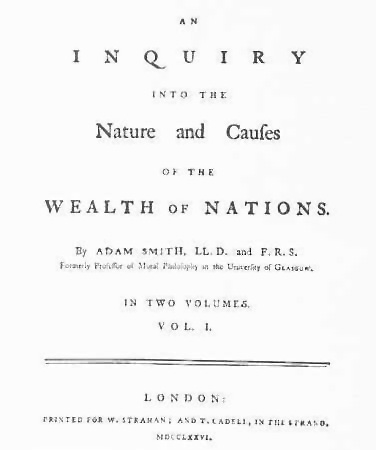
Taxing Responsibilities

Wealth of Nations.jpg

A Blunder Down Under

The Australian economy just can't catch a break these days! First, Australian Stock Exchange (ASX) CEO E. Kupper finally agrees to implement "strenuous suggestions" to resign. Then, the Australian Tax Office (ATO) gets into trouble when word spreads about how accomplished various multinationals have become at gaming the tax system of the country. The situation is heart-breaking, considering that Australia is still reeling from the huge losses incurred by the mining sector during the last few quarters.

The Australian media is awash with everything from breaking news to opinion pieces about the tax fiasco, which is about to escalate from a purely Australian tax fraud investigation, to a crisis that would make The Great Depression look like a drunken stumble. This situation is another reminder that tax law is more complex than it looks, because it (perhaps more than any other field) is highly susceptible to potential conflict of interest (COI) issues.

The Definition Of Conflict Of Interest (COI)

A conflict of interest can occur where commitment to the protection of the primary interest (i.e. the principal goals of the profession or activity) is compromised by excessive concern for the secondary interest (i.e. any & all forms of personal advancement or gain).

COIs are generally viewed as legal missteps that occur very rarely. But, since COIs are not necessarily the product of bad faith or corruption, they are actually more common than most people realize. As an illustration of how even an organization that has a reputation to remain strictly above reproach can unconsciously stray, take the case of the Defense Housing Authority (DHA) of Pakistan.

The Case

The DHA was initially created as a welfare program to provide low-cost real estate to deserving personnel of the Armed Forces & their families. While the legal decision-making power lies firmly with the head of the Army General Headquarters (GHQ), i.e. the Chief of the Army Staff or COAS, informally speaking, the DHA consists of 3 separate "branches": DHA Karachi, DHA Lahore & DHA Islamabad.

While the initial intention still officially stands, rumor has it that the DHA mission statement is becoming increasingly commerce-oriented, to the point that its welfare-related aims are beginning to appear somewhat unimportant since around 2000. That creeping change began galloping when Gen. [r] Ashfaq P. Kayani's enterprising younger brother Capt. [r] Kamran Kayani brought Elysium Holdings into the DHA with the promise of a windfall for the widows & orphans (among others) - & wound up (allegedly) pulling a Ponzi Scheme on them instead.

Fortunately, he & his alleged accomplices were only able to bankrupt DHA Islamabad & DHA Lahore. DHA Karachi is reportedly safe. But for how long? The GHQ is displaying as much composure as can be expected from servicemen, but a poker face isn't going to alleviate the suffering of the affectees of a scam carried out under DHA (&, by extension, GHQ) auspices.

Authority Issues: Corporate HQ Versus Regional Office

The DHA Karachi business model is based almost entirely on the approach of coastal land reclamation: drain the seawater & build on what is basically the seabed. The idea of extending the city into the sea has its risks, but they are outweighed by the Pakistani construction sector's casual disregard for safety code violations...which means that a skyscraper is far more dangerous than the seabed.

Plots of land in DHA Karachi began to be distributed decades ago. Phases 1 through 7 are already in varying stages of commercial & residential use, & are said to be worth a fortune, considering that Karachi is the financial center of Pakistan. Phases 8 & beyond are still being dried out & are consequently completely valueless to the owners for the foreseeable future.

So, why is Phase 8 & beyond being classified under the heading of taxable assets? What is being taxed - the privilege of paying the price of the land & putting one's name on the title deed? Even though, the owner cannot construct, cultivate, rent or live on the land he or she owns - can't benefit or profit from it in any way?

The Pakistani Finance Ministry has made it clear that it has its hands full, convincing national & international stakeholders that its policies do not look like a multinational corporation's Christmas wish list; consequently, it has no time to alter Pakistan's regressive taxation system. But isn't it a little harsh - even by regressive taxation standards - to start heavily taxing a welfare scheme meant for the brave personnel of the Armed Forces & their relatives, years & years before the real estate is worth a nickel to the owner(s)?

While the exact facts can only be explained by an expert in Contract Law, rumor has it that DHA Karachi may have been indirectly instructed to "provide assistance" to its bankrupt counterparts in Lahore & Islamabad, by taxing the Karachi deed-holders (even of currently unusable real estate) more highly to raise a fund for Capt. [r] K. Kayani's alleged victims. If so, that constitutes a COI for DHA Karachi (protection of its own clientèle versus contribution to compensation/ damages/ settlement payments to the Lahore & Islamabad DHA affectees). If so, the GHQ must stop this misguided benevolence before it turns into a class action lawsuit.

The Internationally-Accepted Definition Of Taxable Assets

In order to further clarify what taxable assets cover, here is a brief explanation of the term by Investopedia (www.investopedia.com):

Most types of income are taxable by the Internal Revenue Service (IRS). In fact, all income is taxable unless it is specifically mentioned in the Internal Revenue Code as not taxable. Some examples of taxable income include gains from stock accounts, real estate capital gains after a sale, gains from the sale of common stock & bonds, income from employment, certain fringe benefits, interest gained from bank accounts & tips. Some tax credits & refunds are also taxable, as are under-the-table transactions & bartering. Inheritances, child support, welfare, manufacturer rebates & adoption expense reimbursements are generally not taxed. Gains in tax-deferred accounts are protected from taxation under specific conditions, but may be taxed later or if those special conditions are violated with an early withdrawal or illegal usage. Taxpayers often apply asset allocation strategies to reduce their total tax liability, including the use of tax-deferment accounts. These are legal methods, & may be used alongside deductions & credits.

To reduce taxable income & thereby achieve a lower tax liability, begin by applying all allowed deductions to calculate the adjusted gross income (AGI). Gross income includes all earned & unearned income, but AGI should be significantly lower on most personal returns. Choosing to itemize deductions or opt for the standard deduction will impact total liability, so it is worthwhile to compare tax liability under both options before filing. AGI is the income the IRS applies taxes to, so lowering this number with allowed deductions will result in a lower overall tax liability. Tax credits can further reduce your liability or even result in a refund for the taxpayer.

Saturday, March 26, 2016

Legal Battles

PricewaterhouseCoopers Logo.svg

Baker McKenzie logo.svg

Opening Statement: Numbers Versus Words

PricewaterhouseCoopers Legal was established in London in 2006, but hit several stumbling blocks in training accountants to think like lawyers. However, after 10 long years in the shadows, the rumor is that PwC Legal is finally ready to enter "The War Of The Words" - which is potentially bad news for every global law firm, especially World Number 1, Baker & McKenzie. Because, while B&M is undoubtedly the best in the business, PwC - the accounting side - has thousands of high-value clientèle who trust PwC executives to make (& save) them millions (or billions) in cash; which means that those clients will respect PwC recommendations; which means that once PwC Legal finds the right team of lawyers (reportedly only a matter of time now), other established accounting firms are going to implement the same business model; & that means 2016 is probably a good year for B&M to start exploring its response options.

Exhibit A: Brand Awareness

The Big 4 Accounting Firms command a lot of visibility in both the Developed & Developing Worlds because they basically run the show in making tax policy recommendations to world governments & designing tax avoidance strategies for big business. Deloitte, EY, KPMG & PwC, are names that are well-known by everyone all across the world, from the flat broke to the filthy rich.

When it comes to B&M however, most people have to look it up. For a business that, according to the latest statistics, is ranked as the largest international law firm & the second most profitable law firm (behind Latham & Watkins) in the world, it seems to harbor a pronounced distaste for the spotlight. But, if PwC Legal is serious about leading a charge into international law, the brand awareness that it possesses is going to be a huge advantage over traditional (translation: practically unknown) brands like B&M - especially with the young entrepreneur demographic.

Exhibit B: Headquarters Location

Both PwC & PwC Legal are headquartered in London. London is a very iconic city, well-known to anyone with even the remotest link to sectors such as international business or education. The London label confers great credibility upon any company that maintains corporate headquarters there.

B&M on the other hand, is a Chicago firm; while I'm quite certain that Chicago must be a great place, it just doesn't have the credibility or glamor of New York City, Los Angeles or London. It might be a good idea to make the B&M public image more "chic" by negotiating & undertaking a few well-publicized joint ventures with law firms like Skadden, Arps, Slate, Meagher & Flom (of New York), Latham & Watkins (of Los Angeles) or DLA Piper (of London).

Exhibit C: Relevant Experience

Most prospective clients can accept the idea of a competent accountant remaining loyal to his/her client as he/she navigates his/her way around local & international laws to protect his/her client's financial interests. But no matter which top law school he/she graduated from, people are convinced that a lawyer either cleans you out with his/her billable hours or throws/prolongs the case you hired him/her for (simply because your opponent realized his/her legal skills were worthy of financial incentive the second he/she took your case). Therefore, the odds of clientèle putting not only their legal but financial fate in the hands of a lawyer are close to nil.

B&M is a different case. It focuses primarily on 19 areas of law, which are as follows:
  1. Antitrust & Competition
  2. Automotive
  3. Banking & Finance
  4. Capital Markets
  5. Corporate Compliance
  6. Dispute Resolution & International Arbitration
  7. Employment
  8. Energy, Mining & Infrastructure
  9. Environmental
  10. Financial Institutions
  11. Information Technology & Communications
  12. Insurance
  13. Intellectual Property
  14. Mergers & Acquisitions
  15. Pharmaceuticals & Healthcare
  16. Private Equity
  17. Real Estate
  18. Tax
  19. Trade & Commerce
Its current chairman served as a Co-Chair of the 2015 World Economic Forum for Latin America. Further, B&M has played an important advisory role in a number of high profile multinational transactions, including Dai-Ichi Life Insurance's US$5.7 billion acquisition of NYSE-listed Protective Life Corporation & Alliance Boots' US$638 million acquisition of the largest local retail pharmacy chains in Mexico & Chile.

Closing Statement: The New Reality

Sepp Blatter has recently lost a lengthy battle to hang on to his leadership position in FIFA. Raymond Moore let Indian Wells slip through his fingers. Elmer Kupper just got forced out of his job as head of the ASX. CEO Michael Pearson & Board Member Kate Stevenson have left Valeant Pharma under a cloud & CFO Howard Schiller is reported to be fighting a losing battle to retain his job title & board membership (& possibly his good name as well). Ruane, Cunniff & Goldfarb CEO Robert Goldfarb has paid for the mistake of investing in Valeant Pharma with his career.

This is obviously a time of great change in the international C-Suite, & the aforementioned cases are rumored to be a glimpse of things to come. If that is true, B&M doesn't have much time to revamp its business policies (or else, enter the global accounting sector) because, while it has definitely reaped plenty of success using its Chicago-1949 business model, current global financial conditions indicate that it is time for all the established businesses in the world to accept the new reality where the unlikeliest of people can suddenly transform into a force to be reckoned with. Word on the street is that these changes might have something to do with the power of the Internet. Therefore, to further clarify the time-tested adage, if you can't beat them, do anything but fight them - within the boundaries of legality & good financial sense of course!