Showing posts with label Mines And Minerals. Show all posts

Saturday, October 17, 2015

The A-B-C On OZ & KKR

Kohlberg Kravis Roberts (logo).svg The Blackstone Group logo (2).svg

Carved In (Black) Stone

Glencore has suddenly found itself in a fine mess during the last month or two, with the way its stock has been circling the drain & finally got flushed down the toilet at the end of September. Considering the size of the company & the thousands of decent folk whose incomes depend on a stable economy, we all hope that it can do whatever is necessary to solve the problem & find its footing again...some time soon. But reality is more complicated than people would like; every financial hiccup is accompanied by consequences that affect not only the root of the problem, but entire sectors at a time. Glencore's market misadventures have put the spotlight on the numerous problems that spring from the attempts of various multinationals to get a foothold Down Under.

The latest major wrinkle comes in the form of KKR's investment in OZ Minerals. The investment has given rise to the debate of whether KKR will "do right" by the employees of OZ & the citizens of South Australia. So, from the perspective of an outside party, for example, a speculator or an analyst, what is the real issue? Are KKR's intentions really questionable or is this debate simply a discrete attempt to increase the advantage (& market influence) of a business rival? After all, if the solution to OZ's problems is taking on a financial services firm as a shareholder, then KKR isn't the only game in town; Blackstone would make a pretty fine candidate, too. This discussion is not about Australian corporate law; explaining & applying that is the jurisdiction of the relevant authorities. This week, we will explore the identities of the major players: in effect, this is a formal introduction to OZ Minerals, KKR & Blackstone.

OZ Minerals

The following paragraph is the company summary that Wikipedia offers on OZ Minerals:

"OZ Minerals (ASX: OZL) is an Australian mining company, formed from the merger of Oxiana Limited and Zinifex in 2008. In 2009, Chinese state owned China Minmetals proposed a purchase of the heavily indebted company. The Chinese proposal was one of three high profile moves by Chinese firms to acquire stakes in the Australian mineral sector in early 2009. The China Minmetals offer along with other proposed purchases, especially the Chinalco planned stake in Rio Tinto, caused great public furor, adding political pressure to block Minmetals. The Australian government blocked the sale on 27 March 2009, citing concerns about the location of the Prominent Hill Mine within the sensitive military area. A deal not including Prominent Hill was approved, and the majority of the company was acquired by China Minmetals; the acquisitions became the company Minerals and Metals Group (MMG). OZ now has only one major asset (Prominent Hill), but the sale more than eliminated the Company's debts, giving it cash in hand for operations. In 2011, OZ Minerals acquired the Carapateena iron-oxide copper gold deposit 100 km southeast of Olympic Dam."

The focus in the media is on Carapateena, but industry experts suspect that the real sticking point for the South Australian Government is the Prominent Hill issue. After all Prominent Hill was the reason that the Australian authorities had to take the more complicated path in 2009 when they needed Chinese assistance to save OZ from drowning in red ink. It seems the problem was simply shelved instead of being solved - which is why it has become a stumbling block for KKR six years later.

So the real question is whether KKR is trustworthy enough to handle an enterprise that is located in a sensitive military area, & if it is, can it convince Australia of its sincerity? In reality, there is no effective answer to the verbal question, "Can I trust you?", primarily because everyone will answer "Yes" whether that is the truth or not. The only way to prove a party has the capacity to keep a promise lies in the past record; but KKR has never dealt with classified information or sensitive locations before - assuming the public record tells the full story. While KKR has not responded to the situation yet, this means that outside parties like us have no option but to assess what is part of KKR's public record.

KKR & Co. L.P.

KKR was formed in 1976 in New York by Jerome Kohlberg & his cousins Henry Kravis (current Co-Chairman/Co-CEO) & George R. Roberts (current Co-Chairman/Co-CEO), all of whom got their start working at Bear Stearns. KKR speedily became the most famous enterprise for a new form of financial instrument known as the Leveraged Buy Out (LBO). As a matter of fact, it probably would have been a virtual monopoly in the LBO market today, were it not for its competitor Blackstone Group. KKR is responsible for some of the most pricey LBOs in financial history, such as RJR Nabisco in 1988.

KKR has total assets of US$51.427 billion, an annual revenue of US$8.896 billion (2013 figures) & offices in 10 countries, which are:

01. The United States (company headquarters)
02. The United Kingdom
03. France
04. The People's Republic Of China
05. Japan
06. India
07. The Republic Of Korea
08. The United Arab Emirates
09. Brazil
10. Australia.

KKR focuses on the sectors of financial services, private equity & investment banking. It does this through 9 dedicated investment groups, which are:

01. Chemicals
02. Consumer Products
03. Energy & Natural Resources
04. Financial Services
05. Healthcare
06. Industrial
07. Media & Communications
08. Retail
09. Technology

The Blackstone Group

Blackstone came into existence in 1985. It was founded by Peter G. Peterson, former Chairman of the New York Federal Reserve (2000-4), & Stephen A. Schwartzman, former head of Lehman Brothers global M&A team & current Chairman/CEO of Blackstone. While Peterson & Schwartzman had actually created Blackstone to enter the private equity market, it wasn't until after the October 1987 Stock Market Crash that they managed to get a foothold. Ever since then, it has been a 24/7 competition between Blackstone & top rival KKR for supremacy in the LBO market.

Blackstone has total assets of US$31.510 billion, an annual revenue of US$7.484 billion (2014 figures) & offices in 11 countries, which are:

01. The United States (company headquarters)
02. The United Kingdom
03. France
04. Germany
05. Spain
06. The People's Republic Of China
07. Japan
08. Singapore
09. India
10. The United Arab Emirates
11. Australia

Blackstone focuses on the sectors of financial services, private equity, investment banking & alternative asset management. It's activities are organized into 4 business segments, which are:

01. Corporate Private Equity
02. Investment Banking & Financial Advisory
03. Marketable Alternative Asset Management
04. Real Estate

Conclusion

KKR is older (& richer) than Blackstone, which means it wins hands-down when it comes to experience in general. But Blackstone still might have a fighting chance on the issue of global coverage & experience in dealing with defense-related investments. In 2003, Blackstone completed the acquisition of TRW Automotive for an impressive US$4.7 billion, while TRW's parent company was acquired by well-known defense contractor Northrop Grumman.

Friday, October 9, 2015

Rare Earths: 17 Of 118

Introduction

In 1973, Peshawar University published a study that confirmed the presence of "Rare Earths" in Haripur, Hazara (Khyber Pakhtunkhwa Province). However, the public record doesn't specify which rare earth exactly is there & in what quantity. Not that mining the resource is necessarily a good idea; Haripur is a very fertile zone in Pakistan & mining rare earths is generally very detrimental to the local environment. But even if legitimate residents & landowners are not thrilled to ruin the agricultural economy, the information as to the presence & quantity of this resource would still be very useful to guard against outside parties who have adopted a "highway robber business model" & don't mind what (or who) they destroy as long as they are getting rich.

Rare earths are actually a very important group of 17 elements that play an extremely significant role in today's world because they are the main raw material in the most important cutting edge technologies. Their names & symbols are:

01. Cerium (Ce)
02. Dysprosium (Dy)
03. Erbium (Er)
04. Europium (Eu)
05. Gadolinium (Gd)
06. Holmium (Ho)
07. Lanthanum (La)
08. Lutetium (Lu)
09. Neodymium (Nd)
10. Praseodymium (Pr)
11. Promethium (Pm)
12. Samarium (Sm)
13. Scandium (Sc)
14. Terbium (Tb)
15. Thulium (Tm)
16. Ytterbium (Yb)
17. Yttrium (Y)

Given below is a short summary to acquaint you with the background & commercial value of each of these 17 elements.

The Rare Earths

Cerium2.jpg

CERIUM is named after the dwarf planet Ceres, which itself is named after Ceres the Roman Goddess of Agriculture. It is a soft, silvery, ductile metal that oxidizes easily in air; it is the most abundant of the rare earth elements, making up about 0.0046% by weight of the Earth's crust. It is a raw material in ceramics, chemical oxidizing agents, glass, lighter flints, oil refinery catalysts, polishing powders & self-cleaning ovens.

Dy chips.jpg

DYSPROSIUM derives its name from the Greek "dysprositos" meaning "hard to get" because it is never found in nature as a free element. It has a metallic, silver lustre & is used in lasers, magnetostrictive alloys & neodymium-based magnets.

Erbium-crop.jpg

ERBIUM is named after the village of Ytterby, Sweden, where it is mined. When artificially isolated, it is a silvery-white solid metal, but is never found as a free element in nature. It is an important raw material in fiber optic technology, infra-red lasers & vanadium steel.

Europium.jpg

EUROPIUM, obviously named after the continent of Europe, is a moderately hard, silvery metal that rapidly oxidizes in air & water. It is used to make fluorescent lamps, lasers, mercury-vapor lamps, Nuclear Magnetic Resonance (NMR) relaxing agents & red & blue phosphors.

Gadolinium-4.jpg

GADOLINIUM, a silvery-white, malleable & ductile metal, was named in honor of Johan Gadolin, a scientist who specialized in rare earth research. It is useful in computer memories, highly refractive glass or garnets, lasers, magnetostrictive alloys, MRI contrast agents, Nuclear Magnetic Resonance (NMR) relaxing agents, neutron capture, steel additives & X-ray tubes.

Holmium2.jpg

HOLMIUM is named after Stockholm, which is known as "Holmia" in Latin. It is a relatively soft, malleable, silvery-white, highly-reactive metal that rusts when exposed to moisture & burns when heated. It has applications in lasers, magnets & optical spectrometers.

Lanthanum-2.jpg

LANTHANUM, which derives its name from the Greek "lanthanein" meaning "to be hidden", is a soft, ductile, silvery-white metal that oxidizes rapidly if left in the open. It is used to manufacture battery-electrodes, camera lenses, flints, highly-refractive & alkali-resistant glass, hydrogen storage containers & oil refinery catalysts.

Lutetium sublimed dendritic and 1cm3 cube.jpg

LUTETIUM is named after Paris, which was formerly known as "Lutetia". It is a silvery-white metal that corrodes easily in a moist atmosphere. It is used in highly-refractive glass, lutetium tantalate hosts for phosphors & PET scan detectors.

Neodymium2.jpg

NEODYMIUM is a combination of the Greek words "neo" meaning "new" & "didymos" meaning "twin". It is a soft, silvery metal, tarnishes easily in the open & is as abundant in the Earth's crust as cobalt, copper & nickel. It is used in ceramic capacitors, ceramics, didymium glass, regular glass, lasers & rare earth magnets.

Praseodymium.jpg

PRASEODYMIUM is a combination of the Greek words "prasios" meaning "leak-green" & "didymos" meaning"twin". It is a soft, silvery, malleable, ductile metal that gradually gets covered with a green oxide coating when exposed to the atmosphere. It has applications in carbon arc-lighting, enamels, flints, glasses, lasers, rare earth magnets & welding goggles.


PROMETHIUM, named after the Titan Prometheus, is a radioactive chemical element. It is used to manufacture luminous paint & nuclear batteries.

Samarium-2.jpg

SAMARIUM, a moderately hard, silvery metal that oxidizes rapidly when left in the open, is named after Vasili Samarsky-Bykhovets, a 19th Century Russian mining engineer. It is an important raw material in lasers, masers, neutron capture & rare earth magnets.

Scandium sublimed dendritic and 1cm3 cube.jpg

SCANDIUM is named after Scandinavia, which is known as "Scandia" in Latin. It is a silvery-white radioactive element. It is a raw material in aerospace components, metal-halide lamps, mercury-vapor lamps & oil refinery tracing agents.

Terbium-2.jpg

TERBIUM is named after the village of Ytterby, Sweden, where it is mined. It is a silvery-white metal that, despite being extremely hard, is malleable & ductile. It is used to make fluorescent lamps, lasers, magnetostrictive alloys, neodymium-based magnets & phosphors.

Thulium sublimed dendritic and 1cm3 cube.jpg

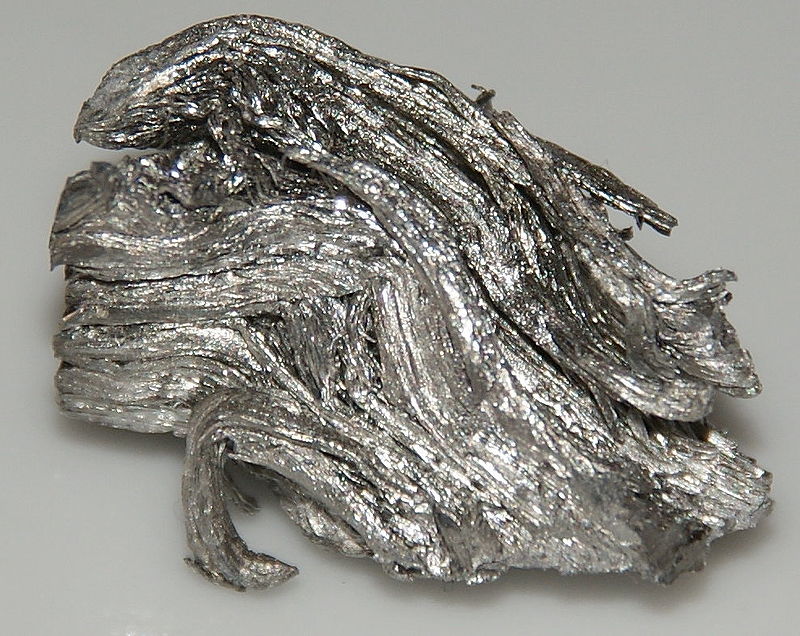
THULIUM is named after the mythological European kingdom of Thule. It is a relatively soft, shiny, silvery-grey metal that gradually loses its shine when exposed to air for an extended period of time. On account of being an easily workable material, it is very useful as a raw material in lasers, metal-halide lamps & X-ray machines.

Ytterbium-3.jpg

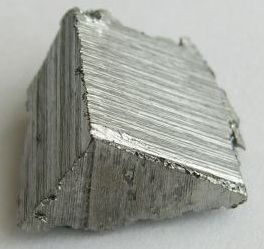
YTTERBIUM is named after the village of Ytterby, Sweden, where it is mined. It is a shiny, silvery-white element that is commonly used in chemical reducing agents, decoy flares, infra-red lasers, nuclear medicine, stainless steel & stress gauges.

Yttrium sublimed dendritic and 1cm3 cube.jpg

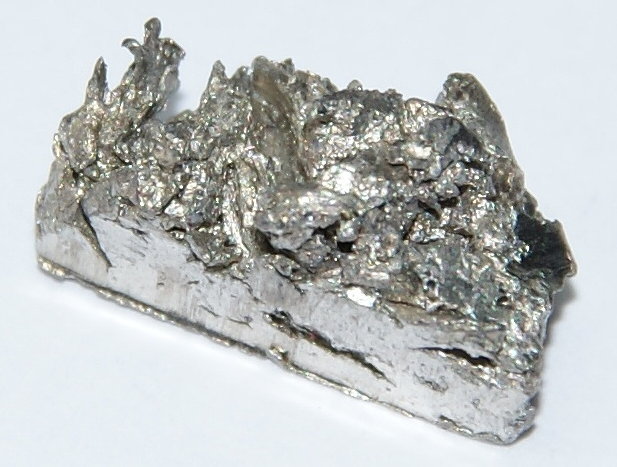
YTTRIUM is named after the village of Ytterby, Sweden, where it is mined. It is a silvery transition metal that is used to make energy-efficient light bulbs, high temperature superconductors, microwave filters, spark plugs, television phosphors & yttrium aluminium garnet (YAG) lasers.

Saturday, July 25, 2015

Topaz: The Symbol Of Strength & Wisdom


History & Mythology

The topaz (one of the main gemstones mined in Chitral District, Khyber Pakhtunkhwa Province, Pakistan) is actually a far more interesting mineral than it appears at first glance. The relatively bad press the topaz routinely gets is likely because it was considered a "diamond replica" by some cultures in the past. But, in reality, the topaz has a very diverse history & an impressive array of applications.

The topaz has been considered an important gem practically since the beginning of Time. The Ancient Egyptians believed that the yellow topaz contained the power, heat & light of the sun, likely because of its color & its curious radiance even in relative darkness. The Ancient Greeks said that a topaz had the power to render its wearer indestructible, probably because of its extremely hard surface. The name "Topaz" is said to be derived from "Tapas", the Sanskrit word for "Fire". The association between the topaz & the sun or fire also indicates its connections to stories such as the Greek legend about Prometheus, in which fire symbolizes knowledge & progress.

Healing Properties

Many gemstones & other precious minerals are believed by herbalists to have curative powers. The reason that this field doesn't get much attention is that Science hasn't quite understood how do fragments of stone actually cure disease or at least relieve its symptoms. Case in point: the curious stories about the link between Chinese jade & cancer treatment. But whether all these stories are true (or just some are), if you really want to understand which gem could play a promising role in which ailment, you must start by studying the history & mythology surrounding that gem.

For instance, the topaz is associated with strength & wisdom. Therefore, ancient doctors would use it as a treatment for anorexia (which is connected with a loss of strength), insanity (the short-term or long-term absence of reason), irritability (which can often be combated by a logical perspective) & nervous exhaustion (the most common trigger of which is confusion about how to deal with Life's challenges).

Economic Uses

Aside from its value as a gemstone, the hardness of the topaz makes it heat-resistant & corrosion-proof, making it a very useful refractory material. It is used as a steel-making flux, in fluorine compound production, in glass-making & in ceramic manufacturing.

Indeed it is expected that as the US Government pursues its privatization of the US Space Program, a durable material like topaz is likely to continue growing in importance.

Saturday, July 18, 2015

An Introduction To Antimony

Antimony-4.jpg

What Is It?

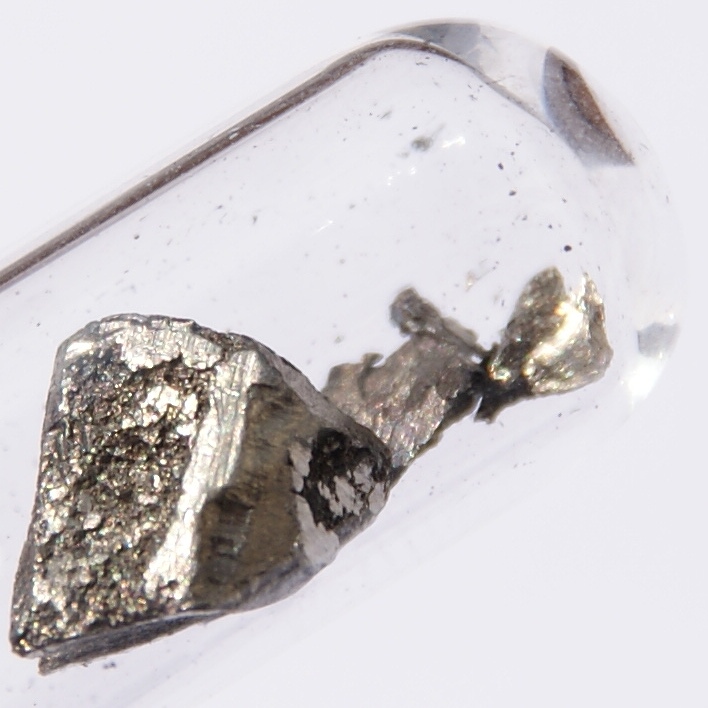
Antimony, a chemical element with symbol Sb & atomic number 51, is a lustrous grey metalloid that is found in nature mainly as the sulfide mineral stibnite. While the majority of the modern day applications of antimony are based on its metallic nature, the ancients used it mainly as a cosmetic or a medicine.

Antimony was discovered in Egypt around 3100 BC & was used as an eye cosmetic called "Kohl". Greek scholar Pliny the Elder wrote at length about the medicinal properties of antimony in his book "Natural History" around 79 AD. The medical applications of antimony were further popularized by the translations of Arab medical treatises by Constantine the African around 1050 to 1100 AD.

Where Is It Found & Who Are The Biggest Suppliers?

Antimony can be found in small quantities in many places around the world; according to the United States Geological Survey, the world has an annual antimony output of 135,000 tonnes, of which the top 5 producers of the element produce 131,000 tonnes or approximately 97%.

The breakdown of that 97% is as follows:

1. THE PEOPLE'S REPUBLIC OF CHINA: 120,000 tonnes or 88.9%
2. SOUTH AFRICA: 3,000 tonnes or 2.2%
3. BOLIVIA: 3,000 tonnes or 2.2%
4. RUSSIA: 3,000 tonnes or 2.2%
5. TAJIKISTAN: 2,000 tonnes or 1.5%

The world's largest antimony deposit can be found in the Xikuangshan Mine in Lengshuijiang City, Hunan Province, southern China. The Xikuangshan Mine has been calculated to contribute over 50% of the total world production of antimony.

The world's largest antimony mining companies are all Chinese. Their names & annual antimony production are as follows:

* Hsikwangshan Twinkling Star = 55,000 tonnes
* Hunan Chenzhou Mining = 20,000 tonnes
* China Tin Group = 20,000 tonnes
* Shenyang Huachang Antimony = 15,000 tonnes

What Are Its Uses & How Much Does It Cost?

The most popular applications for antimony are in flame retardants, batteries, plain bearings & solders, which together account for 80% of the use of global antimony stocks. The remaining 20% is used in the production of polyesters, TV screens, pigments, silicon wafers, infra-red detectors, Hall-effect devices, safety matches & veterinary drugs.

According to MetalPrices.com (licensed data distributor for LME, COMEX, NYMEX & SHFE), antimony is currently being traded at the rate of US$3.60 per pound. That comes to approximately US$7,900 or PKR 808,000 per metric tonne.